
13-Moon Calendar: A Return to Nature or a Modern Myth?

In recent years, the 13-moon calendar has become an almost unavoidable reference in certain spiritual and alternative circles. It is presented as a return to a forgotten time, more natural, more organic, more respectful of living cycles - a time that would finally be in tune with the body, the Earth and the fundamental rhythms of nature. Through the lunar calendar, many hope to rediscover a lost sense of coherence, a breath of fresh air, a gentler way of inhabiting daily life.
Faced with the current 12-month calendar - often accused of being artificial, rigid and disconnected from nature - the lunar calendar appears as an obvious, almost salvific alternative. It is invested with a strong promise: that of repairing a supposed rupture between the human and the living, between measured time and lived time.
But this evidence deserves to be questioned.
For behind the seductive opposition between "natural" and "artificial" time often lies a simplified, reassuring and sometimes idealized narrative. A narrative that contrasts past and modernity, nature and culture, harmony and constraint, without always taking the time to examine its foundations. What if the debate between 12 months and 13 moons wasn't the real issue? What if the question of time was less a matter of division than of inner relationship, of presence, and of inhabiting cycles rather than following them?

The dominant narrative: artificial versus natural time
The Gregorian calendar: why was it created?
The Gregorian calendar we use today was introduced in 1582 by Pope Gregory XIII. Its aim was not ideological, but astronomical and religious: to correct the excesses of the Julian calendar, in order to make the calendar year coincide more precisely with the solar year, and above all with the date of Easter.
This calendar is based on the cycle of the Sun. It introduces leap years, adjusts the months and, above all, seeks stability. It has never claimed to follow the Moon. Its role is to organize collective, administrative, agricultural and economic life.
The problem, then, is not so much the Gregorian calendar itself as our use of time: fragmented, accelerated, filled, rarely inhabited.
The 13-moon calendar as a promise of reconnection
Faced with this time constraint, the 13-moon calendar appears as an almost salvific alternative. It proposes a return to natural cycles, a circular vision of time, a reconciliation with the living.
But this promise often rests on an implicit idea: that there once existed a universal, lunar, harmonious calendar, which mankind abandoned. But history tells a different story.
Ancient calendars: diversity of form and symbolic depth
Before being measurement tools, ancient calendars were symbolic languages. They served not only to count days, but also to give meaning to time. As historians of religion, notably Mircea Eliade, have shown, time was never neutral in traditional societies: it was structured, ritualized, separated into profane and sacred time.
Each civilization thus sought to translate its vision of the world into a temporal organization consistent with its beliefs, environment and rites. Contrary to popular belief, there is no such thing as a universal "original calendar". On the contrary, there is a multiplicity of systems, all imperfect, all fine-tuned, but all conveying a profound wisdom: that of a time lived, symbolized, incarnated.
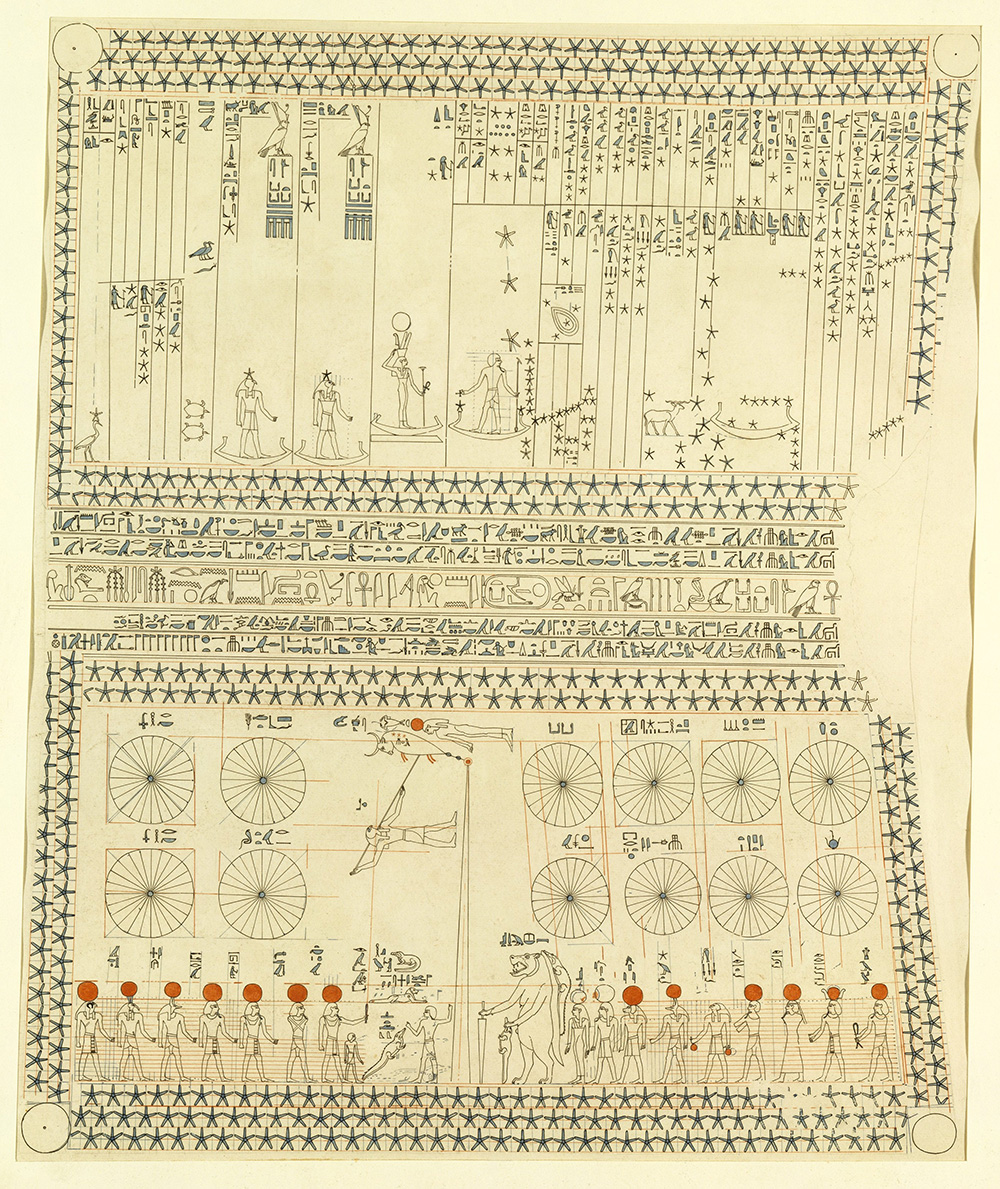
1. The Egyptian calendar: cosmic order incarnated in time
The ancient Egyptian calendar is often presented as one of the most structured of antiquity. The seminal work of Egyptologist Richard A. Parker shows that it was based on a solar year of 365 days: twelve months of thirty days, to which were added five epagomenal days, placed outside ordinary time.
These five days were not mere technical adjustments. They were invested with a strong mythological value, associated with the birth of great divinities. In other words, the imbalance in the calendar became a sacred space, a threshold between worlds.
As Jan Assmann also explains, Egyptian time was conceived as an expression of Maat: the cosmic order. But this order was neither fixed nor mathematically perfect. It was alive and fragile, requiring constant ritual, vigilance and readjustment. The calendar was not an absolute truth, but a symbolic support designed to maintain harmony between heaven, earth and man.
It's a point often forgotten today: this calendar, though highly structured, was never cut off from the sacred. Egyptian wisdom lay not in mathematical perfection, but in the ability to link time to a cosmic vision.
2. Tzolk'in: the sacred Mayan calendar
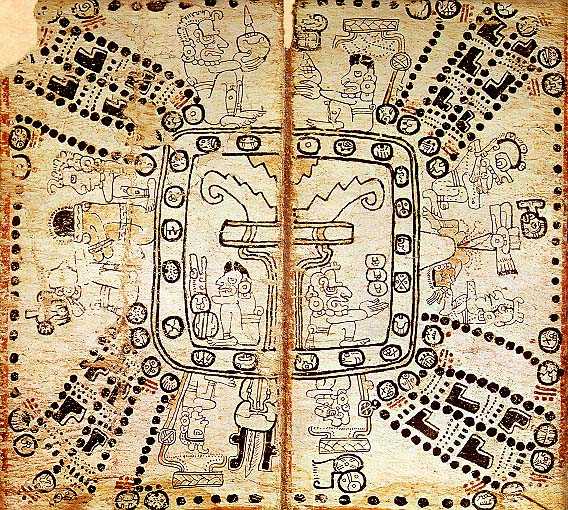
The Tzolk'in occupies a central place in the Mayan concept of time. Contrary to popular belief, it is neither a lunar nor a solar calendar, nor is it an ancestor of the 13-moon calendar.
The Tzolk'in is a sacred 260-day calendar used for ritual and symbolic purposes. As specialists in Mayan civilization, notably Anthony Aveni and Michael D. Coe, have shown, it was not used to organize the calendar year, but to qualify time, to give it meaning.
A symbolic structure
The Tzolk'in is based on a combination of 13 numbers and 20 day signs, forming a sequence of 260 days. This structure does not correspond to any single observable natural cycle. It does not seek to imitate nature, but to create a language of time.
Mayan time is thus qualitative, non-linear: each day has its own tonality. As Munro S. Edmonson points out, Tzolk'in functions as a symbolic matrix for situating human beings within a wider cosmic order.
A demanding wisdom
Tzolk'in was not about individual appeasement or personal alignment in the modern sense. It was part of a collective and ritualistic framework, sometimes demanding, designed to link humans to the cosmos.
It functioned as a complement to other Mayan calendars, notably the solar calendar (Haab'). To present it as a "perfect natural calendar" or as the origin of a 13-moon calendar is therefore a contemporary simplification.
3. The Celtic and Wiccan calendar: time lived across thresholds
In Celtic traditions - and in the modern Wiccan calendar that draws on them - time is not divided into regular months. Instead, it is punctuated by tipping points: solstices, equinoxes and seasonal festivals.
As historian Ronald Hutton has shown, these festivals are based on attested seasonal celebrations, but the Wiccan calendar as practiced today is a modern reconstruction, assumed as such. Its value is not historical in the strict sense, but symbolic and ritualistic.
Here, time is not explained, but experienced. Sabbaths mark thresholds, passages and energy shifts. Wisdom is neither hidden nor codified: it is based on observation, presence, anchoring oneself in the seasons and cycles of nature.
This calendar does not seek perfect regularity, but the rightness of the moment. It invites us to recognize transitions rather than align ourselves with an abstract rhythm.

What these ancient calendars have in common
What these traditions reveal, despite their differences, is fundamental: ancient wisdom did not seek to freeze time in an ideal system. It sought to create a dialogue between man, nature and the cosmos.
Ancient calendars were vehicles of meaning, not ready-made solutions. They did not eliminate irregularity or uncertainty. They integrated them into a broader vision, often symbolic, sometimes ritualistic, always alive.
It is precisely this depth that the contemporary debate around the 13-moon calendar tends to simplify.
The 13-moon calendar: a modern construction rather than an ancient heritage
Before going into detail, a few words of clarification are in order.
The 13-moon calendar, as it is widely used today - 13 periods of 28 days, i.e. 364 days, plus a "day out of time" - does not derive directly from an attested ancient tradition. It's a modern system, built from reinterpreted ancient references.
This doesn't make it absurd or illegitimate. But it does make it situated, ideologically marked, and therefore not neutral.
A frequent confusion between ancient traditions and recent systems
It's essential to distinguish between two realities that are often lumped together:
- the ancient observation of lunations
- the standardized calendar with 13 moons of 28 days
Traditional societies observed the Moon, yes. Sometimes they used lunar months, sometimes lunisolar calendars, sometimes solar. But no known ancient civilization used a fixed calendar of 13 equal 28-day months on a stable annual basis.
Historians of astronomy and time, such as Anthony Aveni, point out that ancient calendars were adaptive, constantly corrected to somehow keep up with shifts between lunar cycles and the solar year. Perfect regularity was neither sought nor possible.
The 13-moon calendar, in its current form, is therefore a contemporary reconstruction of "sacred time", designed to meet a modern need for coherence, legibility and symbolic harmony.
Where does the modern 13-moon calendar really come from?
The most widespread form of the 13-moon calendar appears in the XXᵉ century, mainly in the 1980s-1990s. It is widely popularized by José Argüelles, notably through his work around what he called the Law of Time.
Argüelles draws inspiration from:
- the Mayan ritual calendar (Tzolk'in),
- certain Amerindian traditions,
- a radical critique of modern industrial time.
However - and this is a crucial point - his work is not academic historical or archaeological research. Specialists in Mayan civilization, such as Michael D. Coe, have explicitly pointed out that contemporary uses of the 13-moon calendar do not correspond to the Mayan calendars attested by the sources.
We are therefore faced with a modern ideological creation, inspired by ancient symbols, but structured according to a contemporary worldview.
The myth of ancestrality as an argument of authority
One of the most powerful forces behind the success of the 13-moon calendar is an implicit idea: "In the past, we lived better, more naturally, more in harmony with the cycles".
This assertion has less to do with history than with nostalgia.
Historians of religion, notably Mircea Eliade, have shown that traditional societies did not live in a harmonious golden age. They lived in an unstable, unpredictable and often harsh world, which they tried to make intelligible through myth, ritual and symbol.
Idealizing the past often amounts to projecting our contemporary aspirations onto societies that shared neither our issues nor our mental frameworks.
The 13-moon calendar conveys a specific worldview: criticism of modernity, a quest for harmony, a need for re-enchantment. This is respectable. But it's not a historical fact.
Nature isn't regular (and this is where the story breaks)
In strictly astronomical terms, the average lunar cycle lasts 29.53 days. This length varies slightly from cycle to cycle. In a solar year, we observe around 12.37 lunations.
This means one simple thing: the Moon does not conform to a perfect annual division.
All ancient lunar or lunisolar calendars had to deal with this irregularity: intercalary months, periodic adjustments, empirical corrections. No traditional system has pretended to abolish this tension.
Why an overly perfect system is reassuring
The 13-moon calendar offers a seductive equation:
- 13 × 28 = order
- symmetry
- perfect repetition
- immediate legibility
It offers an image of a clean, regular, comprehensible nature. A nature that finally fits into a clear framework.
But this perfection is precisely what needs to be questioned. As historians of science and cosmology remind us, real nature is irregular, fluctuating and surplus to requirements. It does not seek perfect equilibrium, but movement.
The success of the 13-moon calendar reveals less a fidelity to living things than a human need for fixed reference points, in a world perceived as chaotic.
? Key question: are we looking for nature... or a reassuring version of it?
What the 13-moon calendar promises... and what it can't deliver
The 13-moon calendar seduces us with its implicit promises. It suggests a return to a more natural, harmonious time, more in line with living cycles. It offers a clear, regular, almost soothing structure in a world perceived as fragmented and chaotic.
What it can really offer is a change of perspective. An invitation to slow down. A salutary critique of productivist time. A symbolic framework for restoring meaning where time is often experienced as a constraint.
But what it can't deliver is the promise of a return to a golden age. It does not restore a vanished ancient calendar. It does not faithfully reproduce natural cycles, which remain irregular and shifting. And it does not, on its own, transform our relationship with time.
As historians of religions and cultures have shown, the sacred is not born of a perfect system, but of the way in which time is lived, ritualized and inhabited. Changing the calendar can be a starting point. It's never a solution in itself.

Changing calendars without changing consciousness: an illusion of freedom
At this point, the question naturally arises: what really happens when you change calendars?
Very often, changing systems is experienced as a liberation. Abandoning the Gregorian calendar in favor of a 13-moon calendar gives the feeling of escaping from an imposed, constrained, dehumanized time. But this impression deserves to be questioned closely.
For a calendar, whatever it may be, remains a framework. And all frameworks structure our relationship with time, whether we like it or not.
The calendar as a system of norms (even spiritual norms)
A calendar does more than simply indicate dates. It organizes expectations, prioritizes moments, creates implicit markers: the right time to act, the right time to rest, the right time to transform, celebrate, let go.
The 13-moon calendar is no exception to this logic. It simply proposes other norms, often more subtle, but just as structuring: to be in the right moon, to respect the right cycle, not to "miss" an energy.
The risk is not so much the system itself as the relationship we maintain with it. When the framework becomes prescriptive, it ceases to be a support and becomes an injunction - even in gentle, spiritual or symbolic forms.
When spirituality becomes performative
In certain contemporary discourses, the relationship with time slides insensitively towards a form of spiritual performance. It's no longer just a question of living the cycles, but of following them correctly. To be aligned. Synchronized. Up to date.
This phenomenon is not new. Historians of religion, including Mircea Eliade, have shown that the sacred can also become normative when it is cut off from lived experience. The rite, originally intended to connect, can become an obligation when it loses its inner dimension.
Changing the calendar without questioning this dynamic is tantamount to shifting the framework, without touching the deeper structure: that of a time experienced as external to oneself, which one must follow, master or succeed.
The real shift is not temporal, but inner
Ancient societies were not freer because they used other calendars. They lived within temporal frameworks that were often very restrictive, but they had integrated one essential thing: time was not separate from human experience.
What made the difference was not the number of months, but the presence of moments lived. Festivals, rituals and passages carried weight because they were embodied, shared, experienced collectively or inwardly.
In other words, freedom does not come from a different division of time, but from a change of attitude towards time.
This observation opens up a broader perspective: if no single calendar can transform our relationship with time, then where does the possibility of a fairer, more lively, more inhabited time really lie?
This is what we'll explore in the next section, leaving the field of systems to return to the essential: the experience of time itself.
Why this debate is back with such force today
If the 13-moon calendar is arousing so much interest today, it's neither by chance nor simply a spiritual fad. It's part of a wider context, marked by deep collective fatigue and a rethinking of our relationship with time.
This resurgence of the debate reveals less a need to change the calendar than a need to rethink the way we inhabit time.
Collective fatigue and mental saturation
The signs are now widely documented: burn-out, cognitive overload, a feeling of permanent acceleration, difficulty in pausing. Time is experienced as a continuous flow of obligations, notifications and objectives to be met.
In this context, the Gregorian calendar becomes the symbol of a time that is suffered, fragmented and performance-oriented. Not because it is intrinsically oppressive, but because it has become the support for a way of life that leaves little room for integration, slowness or meaning.
The loss of temporal reference points is not just organizational. It's existential. When each day resembles the previous one, when the seasons no longer have a lived relief, time ceases to be a space of experience and becomes a simple succession of units to be managed.
The 13-moon calendar as a symbolic refuge
In this saturated landscape, the 13-moon calendar appears as a symbolic refuge. It promises something else: a slower, more regular, more legible rhythm. It gives form to time, where it seems to have dissolved into urgency.
The success of this model lies not so much in its historical accuracy as in what it represents:
a desire for slowness, a need for the sacred, the search for an alternative framework to restore meaning to daily experience.
It's not a mistake, it's a symptom.
As historians of religion, notably Mircea Eliade, have shown, when the sacred disappears from lived time, it reappears elsewhere, in other forms. The 13-moon calendar responds to this quest: it reintroduces symbolism where time seems emptied of its depth.
The false 12- or 13-month calendar debate
By opposing solar and lunar calendars, ancient and modern, natural and artificial, we end up missing the point. The real issue lies not in the number of months, but in the way we experience time on a daily basis.
What calendars can't do for us
No calendar, however inspiring, can be there for us. No system can mark the passages if it is not internally invested. No division of time can, on its own, give meaning to lived experience.
Calendars can indicate landmarks, they can suggest rhythms. They can suggest rhythms. But they can neither create attention, nor arouse presence, nor mechanically transform our relationship with time.
When meaning disappears, it's not because the calendar is wrong, but because the link between time and experience has become distorted.
Back to the center rather than the system
If we look closely at what those who turn to other calendars are looking for, one thing becomes clear: it's not just a question of time, but of inner disorientation. The framework is no longer enough. The system no longer makes sense. What's missing is not a new rhythm, but an anchoring point.
This is precisely where sacred geometry can be understood - not as a solution, still less as a tool for controlling reality, but as a language for refocusing.
In ancient traditions, geometric shapes were not used to organize time or cut it up. Rather, they served to remind us of a fundamental structure: that of the center, of the axis, of balance. The circle, for example, indicates neither beginning nor end. It imposes no rhythm. It simply invites us to return to the central point, where experience can be fully lived.
In other words, where the calendar seeks to order time, the symbol seeks to inhabit the moment.
Returning to the center rather than to the system means accepting that meaning is not born of a perfect grid, but of renewed attention. It means restoring the value of personal rituals, not because they are part of an ideal calendar, but because they are consciously lived. It means recognizing that embodied presence transforms the relationship with time more than any division, however harmonious.
From this perspective, sacred geometry doesn't propose a different way of counting days. It reminds us of something more essential: time is not just what passes, but what is lived. And that doesn't depend on 12 months or 13 moons, but on the quality of presence we are able to bring to it.

And now, what do you do with your time?
The debate surrounding the 13-moon calendar says much less about time than it does about our relationship with time. Behind the question of the number of months lies fatigue, a quest for meaning, a need to slow down and re-inhabit what all too often eludes us.
History shows us one essential thing: there has never been a perfect calendar. Ancient civilizations did not live in idealized harmony with time. They dealt with its irregularity, unpredictability and symbolic power. Their wisdom lay not in an ideal system, but in their ability to give meaning to passages, to ritualize thresholds, to inscribe lived experience within a broader vision.
The 13-moon calendar is therefore neither a sham, nor a forgotten revelation. It is a contemporary symptom: that of a world in search of landmarks, of a more habitable time, of a more human rhythm. It can be a gateway. It cannot be a solution in itself.
The real question is not whether you live by 12 months or 13 moons.
The real question is simpler - and more demanding:
? Are you present when time passes?
Take a moment.
Not to change your calendar.
Not to adopt a new system.
But to observe your relationship with time, here and now.
How do you mark the passages in your life?
What moments do you really take the time to inhabit?
Where do you look for meaning: in an external structure... or in the attention you pay to what you're experiencing?
Returning to the center doesn't require a different division of time. It requires a different quality of presence. A more conscious gaze. A more conscious gesture. A symbol, sometimes, to remind us of what's essential.
Perhaps time never needed to be reorganized.
Perhaps it simply needed to be lived.
If you liked this article, feel free to comment, share and subscribe to our newsletter to be informed of future issues.
Sources & main references
This article is based exclusively on reference works on the history of religions, archaeoastronomy and the study of ancient civilizations. The sources cited are authorities in their field and recognized for their scientific rigor.
Le Sacré et le Profane - Mircea Eliade - Éditions Gallimard
Fundamental work on the distinction between profane and sacred time, and on the way in which traditional societies structure time through ritual and symbol.
Timée - Platon - Éditions Flammarion
Founding text of Western philosophy defining time as a "moving image of eternity".
The Calendars of Ancient Egypt - Richard A. Parker - University of Chicago Press
Reference work on the Egyptian calendar: solar structure, 365-day year, symbolic role of epagomenal days.
Maât - Jan Assmann - MdV Editeur
In-depth analysis of the notion of Maât (cosmic order) and the symbolic function of time in Pharaonic Egypt.
Empires of Time - Anthony F. Aveni - Basic Books
A major work of archaeoastronomy on ancient calendars, particularly the Maya, and the plurality of time systems.
The Maya - Michael D. Coe - Thames & Hudson
An essential reference on the Maya civilization, its cosmology and its archaeologically attested calendars.
The Book of the Year - Munro S. Edmonson - University of Utah Press
Detailed study of Mesoamerican calendar systems and their symbolic significance.
The Stations of the Sun - Ronald Hutton - Oxford University Press
Reference work on seasonal festivals, attested Celtic traditions and the modern reconstruction of the Wiccan calendar.


 Are we prisoners of our hormones?
 No, not everything is a message from the universe
 Independent businesses sacrificed by the State
 The Octagon: Symbol of Divine Justice and Balance
 13-Moon Calendar: A Return to Nature or a Modern Myth?
